Every kitchen holds a small argument between the new and the old. In most Indian kitchens, that argument is settled by whichever jar sits closest to the stove. For most of the last hundred years, that jar has been white sugar. Before that, for centuries, it was palm jaggery.
Refined white sugar is the industrial revolution in edible form — cheap, uniform, and hollow. Palm jaggery is the opposite. Slow, mineral, small in yield, deeply aromatic. This piece walks through what changes when you switch, and how to cook with it without turning every dish into dessert.
What actually is palm jaggery
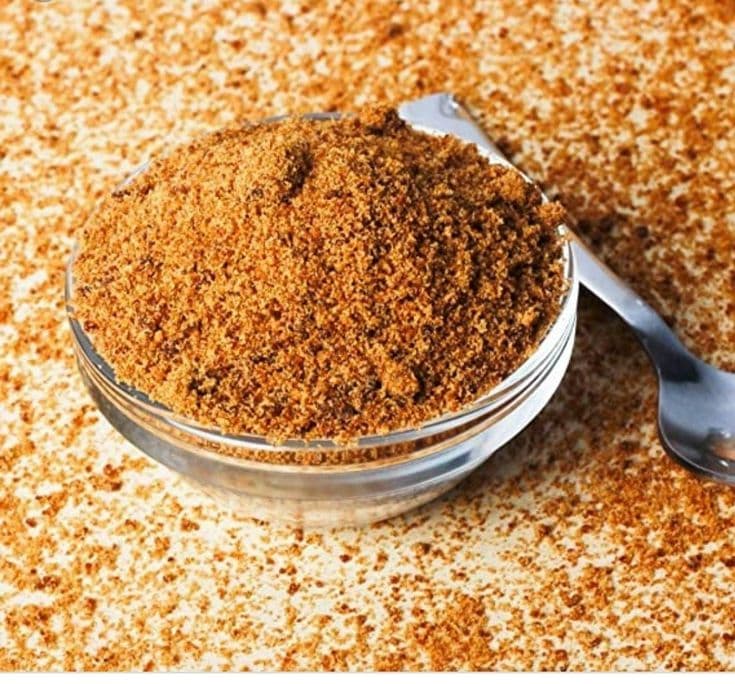
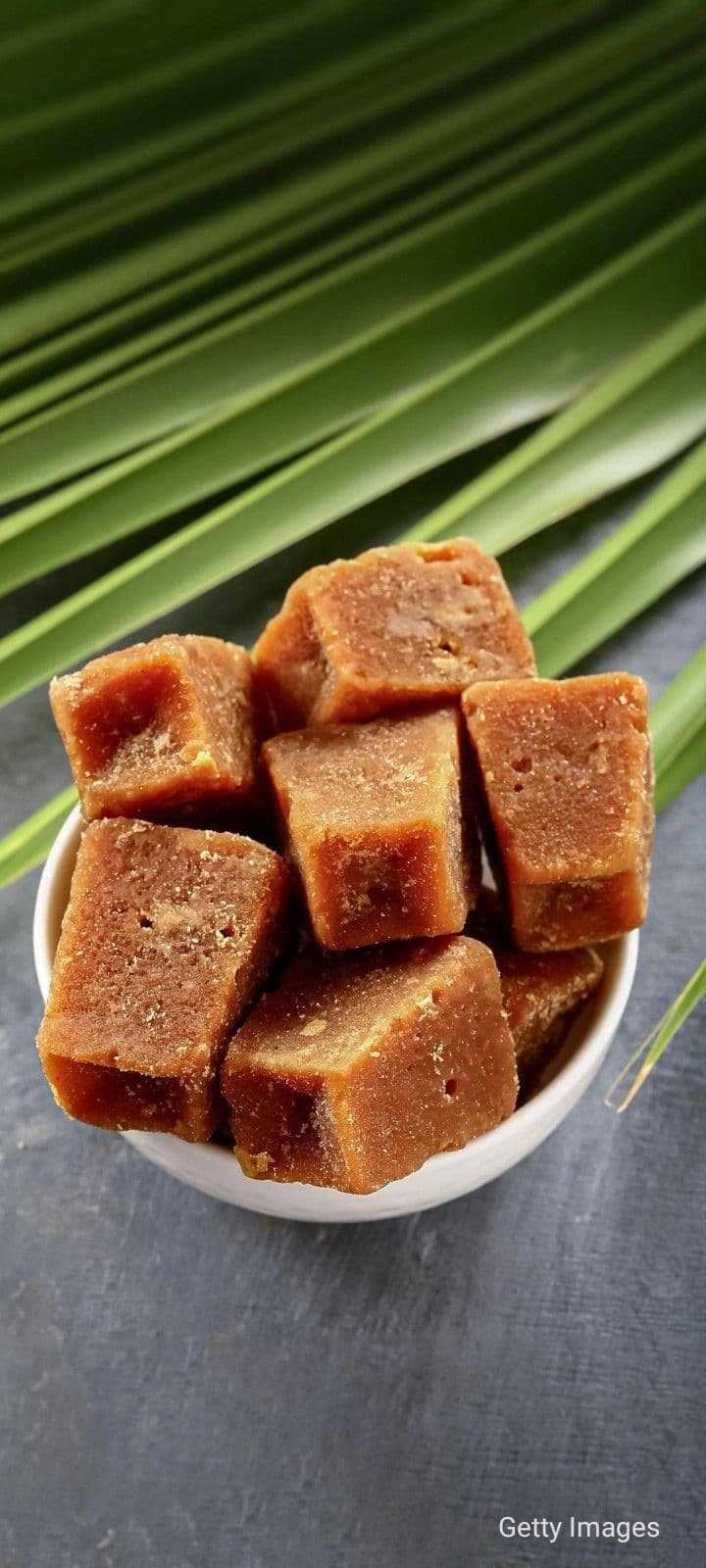
Palm jaggery is made from the sap of the palmyra palm — a tall, hardy tree that grows across the dry belts of Tamil Nadu and Andhra. Farmer families climb the palm at dawn, collect the sweet foaming neera, and boil it the same day in shallow iron kadhais over open wood fires. What settles into the mould after six hours is a dark, aromatic block that carries the smoke and mineral of the land it came from.
No chemicals. No sulphur. No bleaching. Just sap, fire, and time. Our palm jaggery is made exactly this way.
How white sugar is made — and what it leaves out
White sugar starts as cane juice too. But it is stripped through a sequence of industrial steps — clarified with sulphur dioxide, precipitated with lime, filtered through carbon char, crystallised, spun, dried, and packaged. The molasses is separated out. So are the minerals, the enzymes, and the flavour.
What you get is nearly-pure sucrose. Nearly-pure sweetness. And nearly nothing else.
The mineral difference
Per 100g, palm jaggery holds roughly 11 mg of iron, 70 mg of magnesium, 1050 mg of potassium and 85 mg of calcium. White sugar holds essentially none of these. That does not make palm jaggery a supplement — it is still a sweetener, best used in moderation — but it does make the swap meaningfully different.
The glycemic index is lower too. Palm jaggery sits around 35 on the GI scale; white sugar sits at 65. Not diabetic-friendly (nothing sweet is) but distinctly gentler.
How to cook with it
The trick is not to substitute 1:1 and expect the same taste — palm jaggery is more aromatic and slightly less sweet. Use about the same weight; the caramel notes fill in the rest. In coconut milk-based payasams and kheers, it is transformative — the mineral edge cuts the richness and makes each spoon feel like a whole dessert instead of just sweetness.
In filter coffee, a single small piece dissolves in the decoction and gives the drink a smoky depth that sugar cannot replicate. In warm ghee — a spoonful of each, rolled into a ball — it is the classic South-Indian post-meal digestive.
What to look for when buying
The colour tells you everything. Genuine palm jaggery is dark — chocolate-brown to nearly black. If it is bright yellow or pale amber, it has been sulphur-treated to remove colour. If the packaging screams "no chemicals" but the block is uniformly bright, the packaging is lying.
The aroma tells you the rest. Real palm jaggery smells like caramelised molasses with a trace of smoke. If it smells sugary and one-dimensional, it has been over-processed. Trust your nose.